The best cabin bags for air travel are not the same for everyone. A bag that rolls easily through a big hub like Frankfurt or Schiphol can be the wrong choice on a packed Ryanair flight where staff are checking bags against the sizer at the gate. What you should buy depends on three things: your airline rules, how long your trip is, and how much walking and queuing you actually do.
Cabin baggage sizes are not universal across Europe. Low-cost carriers tend to be the strictest, traditional full-service airlines are usually more generous, and long-haul carriers often allow a larger bag plus a personal item. EU lawmakers have discussed standardising a free small cabin bag, but airlines still apply their own limits, so a case that flies free on one carrier can cost a fee on another.
Always check your airline latest cabin baggage rules before buying or flying, because size and weight limits can change.
Quick Comparison Table
Rank | Bag | Best for | Type | Main advantage | Main drawback | Link |
|---|---|---|---|---|---|---|
1 | Travelpro Maxlite 5 Carry-On Spinner | Best overall | Soft-shell spinner | Light for a wheeled bag | Soft shell offers less crush protection | |
2 | Samsonite Freeform 55cm Spinner | Best hard-shell | Hard-shell spinner | Solid protection | Bulkier to pack than soft bags | |
3 | Amazon Basics Hardside Cabin Suitcase | Best budget suitcase | Hard-shell spinner | Low price | Fewer refinements than premium brands | |
4 | American Tourister Airconic Spinner | Best lightweight suitcase | Hard-shell spinner | Low weight saves allowance | Light shells can scuff | |
5 | Aerolite 55 x 40 x 20 Cabin Suitcase | Best for low-cost airlines | Soft-shell | Sized for common cabin limits | Re-check current airline rules | |
6 | Antler Cabin Suitcase With Pocket | Best for business travel | Hard-shell with front pocket | Quick laptop access | Front pocket adds depth | |
7 | Amazon Basics Underseat Rolling Bag | Best underseat rolling bag | Underseat with wheels | Fits under the seat, still rolls | Small capacity | |
8 | Taygeer Underseat Cabin Backpack | Best budget cabin backpack | Backpack | Cheap and flexible | Weight sits on your back | |
9 | Amazon Basics Carry-On Travel Backpack | Best laptop backpack | Backpack | Good for laptops and stairs | Less structure than a case | |
10 | American Tourister Rejoy Spinner | Best value branded suitcase | Hard-shell spinner | Brand reliability at a fair price | Mid-range finish |
What to Look for in a Cabin Bag
A few features actually matter at the airport. The rest is marketing.
Size and airline limits: this is the one that costs you money. Many European carriers use a larger cabin bag around 55 x 40 x 20 cm and a small personal item around 40 x 20 x 25 cm, but the numbers vary, and basic fares often only include the small bag. Measure the external dimensions, wheels and handles included.
Weight: some airlines cap cabin weight, often around 10 kg, though it differs. A heavy empty bag eats into that before you pack anything.
Wheels vs backpack: wheels save your shoulders in big terminals. A backpack wins on stairs, on the bus to a remote stand, and on cramped budget flights.
Hard-shell vs soft-shell: hard shells protect fragile items and look tidy. Soft shells flex into a tight sizer and usually have outside pockets. Each fails in a different way.
Laptop access: if you fly for work, a sleeve you can reach without unpacking saves time at security.
Underseat compatibility: an underseat bag keeps essentials with you and can suit strict basic fares. The trade-off is space.
Expandable bags: expanders help on the way home, but they can be risky for strict airlines. Once expanded, the bag may not fit the sizer, and staff judge it at full size.
Why frequent flyers go lighter: if you fly often, weight and ease of movement beat raw capacity. The people who travel most usually carry the least.
Best Cabin Bags for Air Travel in 2026
1. Travelpro Maxlite 5 Carry-On Spinner — Best overall cabin bag
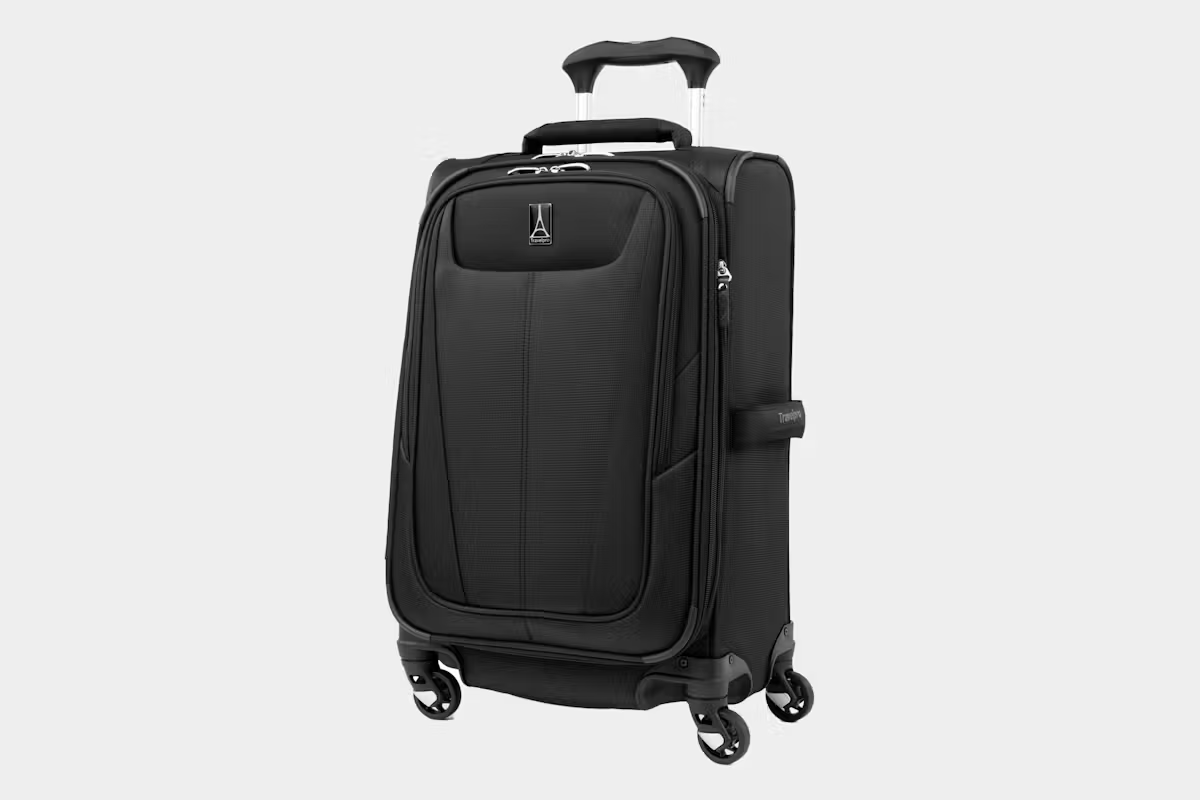
Travelpro is a brand a lot of cabin crew use, and the Maxlite line is the reason. It is a soft-shell spinner that stays light without feeling flimsy, which makes it a safe default for most travellers.
Best for: travellers who want one reliable bag for mixed trips.
Why it works for air travel: the low weight protects your allowance, the soft sides flex for tight overhead lockers, and four wheels make long terminals easy.
What to check before buying: confirm the external size against the airlines you use most. Check the latest size and weight details on the Amazon product page before buying.
Who should avoid it: if you pack fragile gear, a hard shell gives more protection.
2. Samsonite Freeform 55cm Spinner — Best hard-shell carry-on suitcase
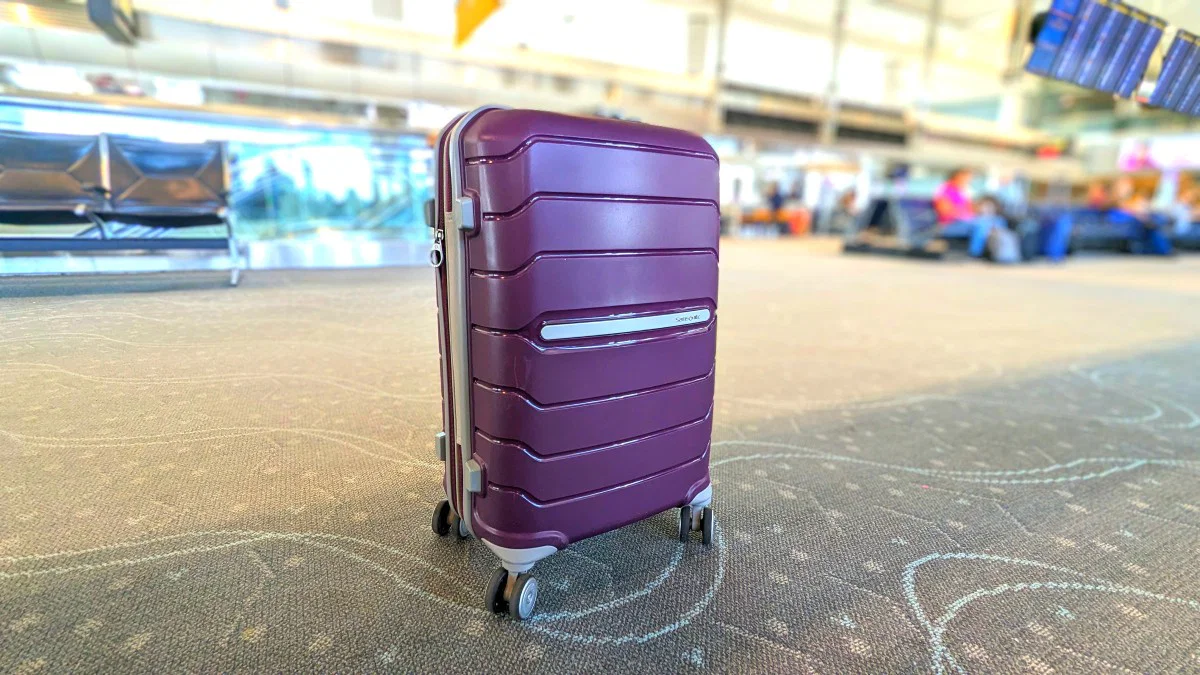
If you would rather have a protective shell, the Freeform is a sensible pick from a brand that has been making luggage for a long time. A hard shell shrugs off knocks on the rare flight where you are forced to put it in the hold at the gate.
Best for: travellers carrying electronics, glasses, or anything that dents.
Why it works for air travel: the shell holds its shape, the clamshell packs neatly, and spinner wheels handle smooth airport floors.
What to check before buying: hard shells do not squeeze, so the listed size is the real size. Make sure it matches your airline limit.
Who should avoid it: if you sometimes overpack, a soft bag with give is more forgiving.
3. Amazon Basics Hardside Cabin Suitcase — Best budget cabin suitcase
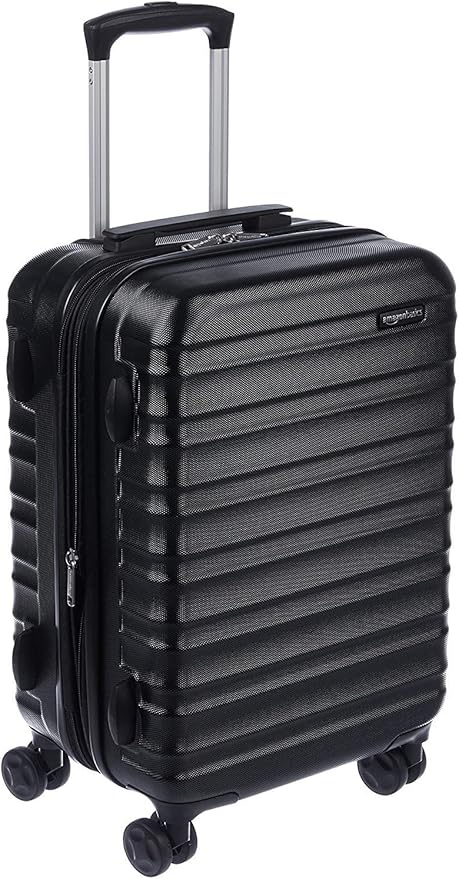
Not everyone wants to spend a lot on luggage, and that is fair. This one covers the basics: a hard shell, spinner wheels and a cabin footprint, without the premium price.
Best for: occasional flyers and anyone who does not want to baby an expensive bag.
Why it works for air travel: it does the core job at a low cost, so a scratch or two will not bother you.
What to check before buying: budget bags vary in finish, so read recent buyer photos and confirm the size. Check the latest size and weight details on the Amazon product page before buying.
Who should avoid it: heavy, frequent travellers who will wear out cheaper zips and wheels faster.
4. American Tourister Airconic Spinner — Best lightweight suitcase
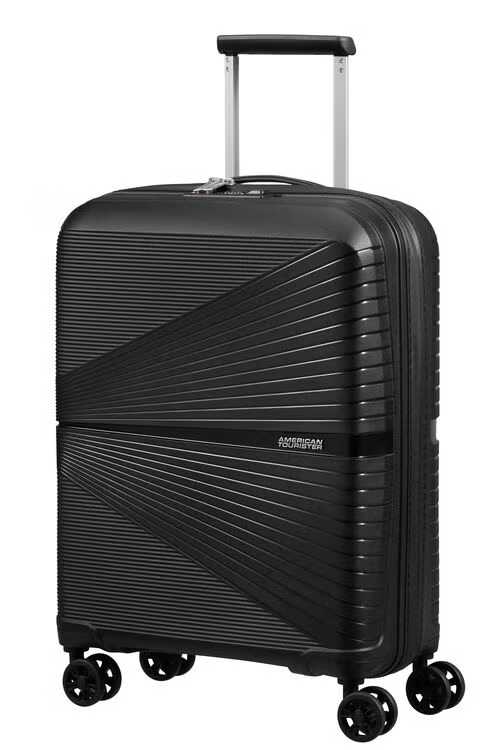
The Airconic leans into being light. For airlines that weigh your cabin bag, starting from a lower base weight is a real advantage, because every gram the bag does not use is a gram you can pack.
Best for: travellers flying airlines with cabin weight limits.
Why it works for air travel: less empty weight means more usable allowance and an easier lift into the locker.
What to check before buying: lighter shells can scuff more easily, so set expectations on looks over time.
Who should avoid it: anyone who treats luggage roughly and wants a tougher, heavier shell.
5. Aerolite 55 x 40 x 20 Cabin Suitcase — Best for European low-cost airlines
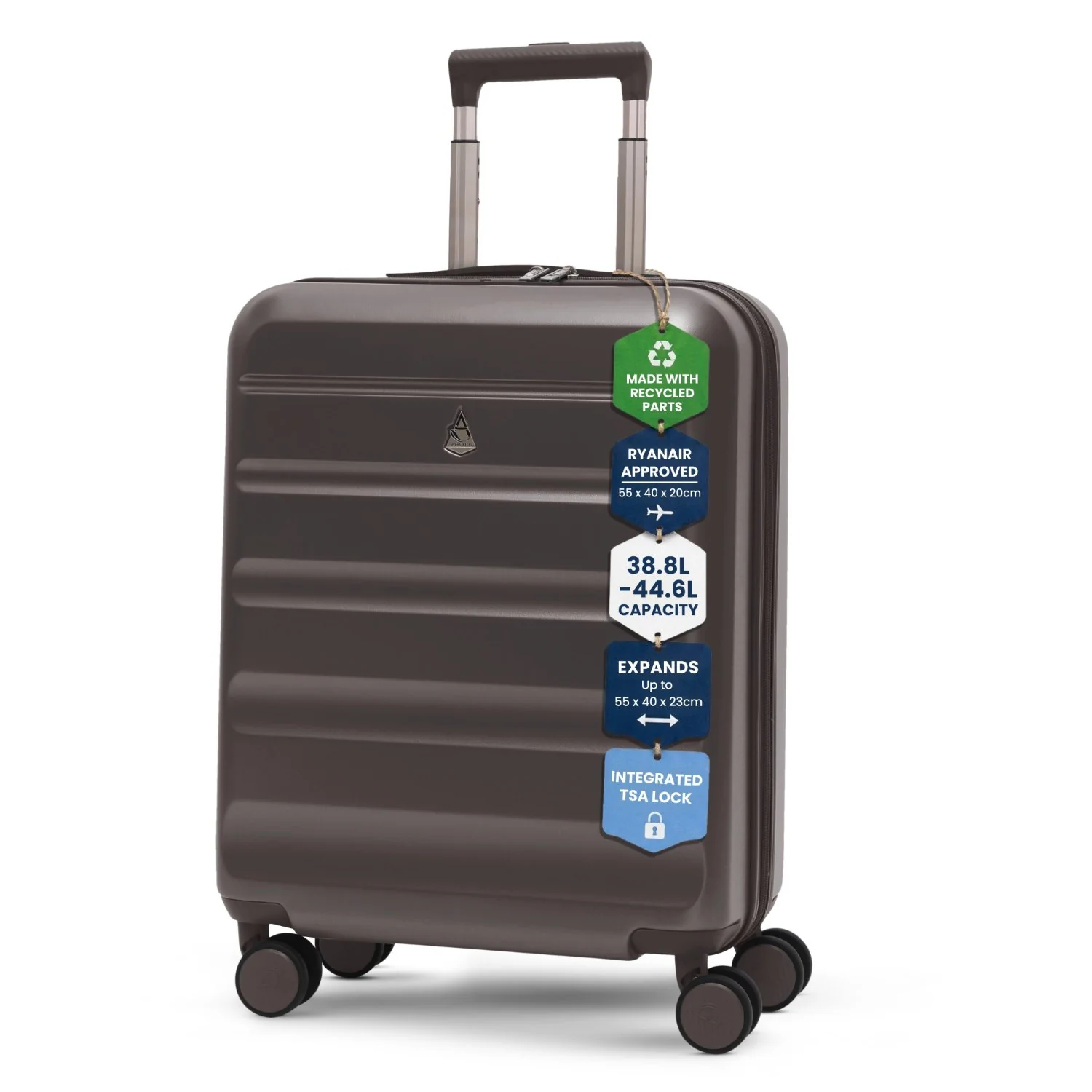
The name points to a size band many European carriers use for a larger cabin bag, which makes it popular with budget-airline flyers. One caveat applies to every bag in this category.
Best for: travellers who want the maximum allowed cabin space on low-cost airlines.
Why it works for air travel: it is built around common cabin dimensions and the soft sides flex into a sizer.
What to check before buying: rules change, and not every fare includes a larger cabin bag. Confirm your airline and fare current limit before relying on this size.
Who should avoid it: anyone on a basic fare that only allows a small underseat item, where this may be too big.
6. Antler Cabin Suitcase With Pocket — Best for business travellers
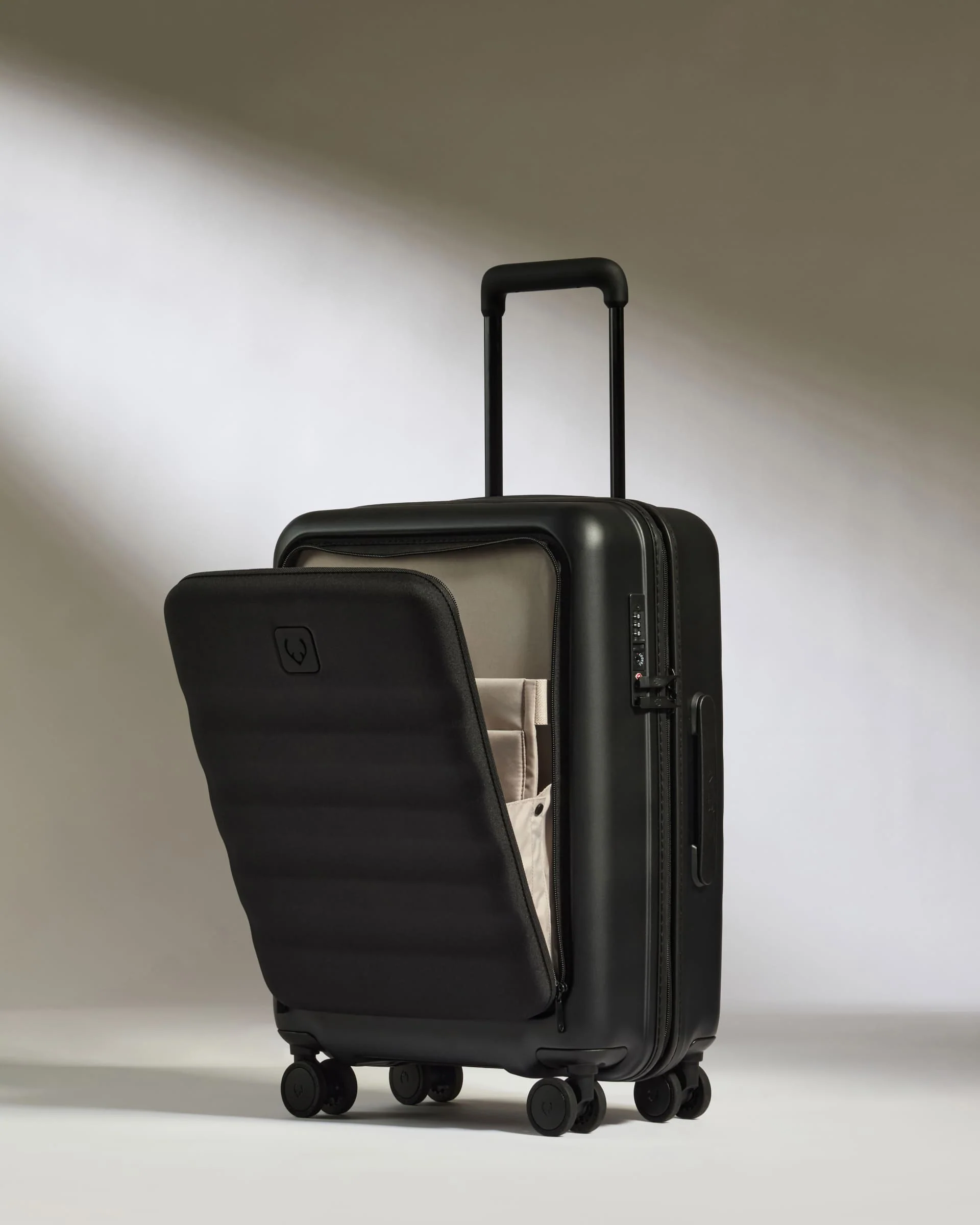
The front pocket is the point here. Sliding a laptop or paperwork in and out without opening the main case is genuinely useful when you are moving between meetings and gates.
Best for: business travellers who need laptop and document access on the move.
Why it works for air travel: the external pocket speeds you through security and lets you work without unpacking.
What to check before buying: a front pocket adds depth, so measure the full bag against strict limits.
Who should avoid it: leisure travellers who would rather use that space for clothes.
7. Amazon Basics Underseat Rolling Bag — Best underseat rolling bag
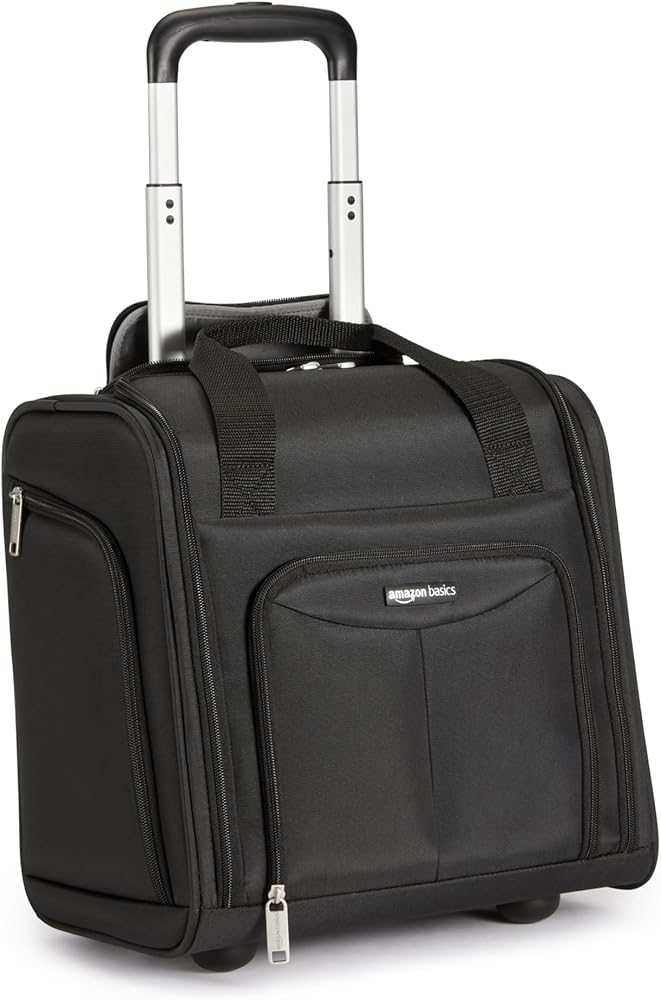
This is the compromise bag: small enough to go under the seat in front of you, but on wheels so you are not carrying it through the terminal. For short trips it can be all you need.
Best for: overnight trips, day returns and strict fares that only allow an underseat item.
Why it works for air travel: it keeps essentials within reach during the flight and avoids the overhead-locker scramble.
What to check before buying: underseat space differs by aircraft and seat, so confirm the size suits the planes you fly.
Who should avoid it: anyone packing for more than a couple of days.
8. Taygeer Underseat Cabin Backpack — Best budget cabin backpack
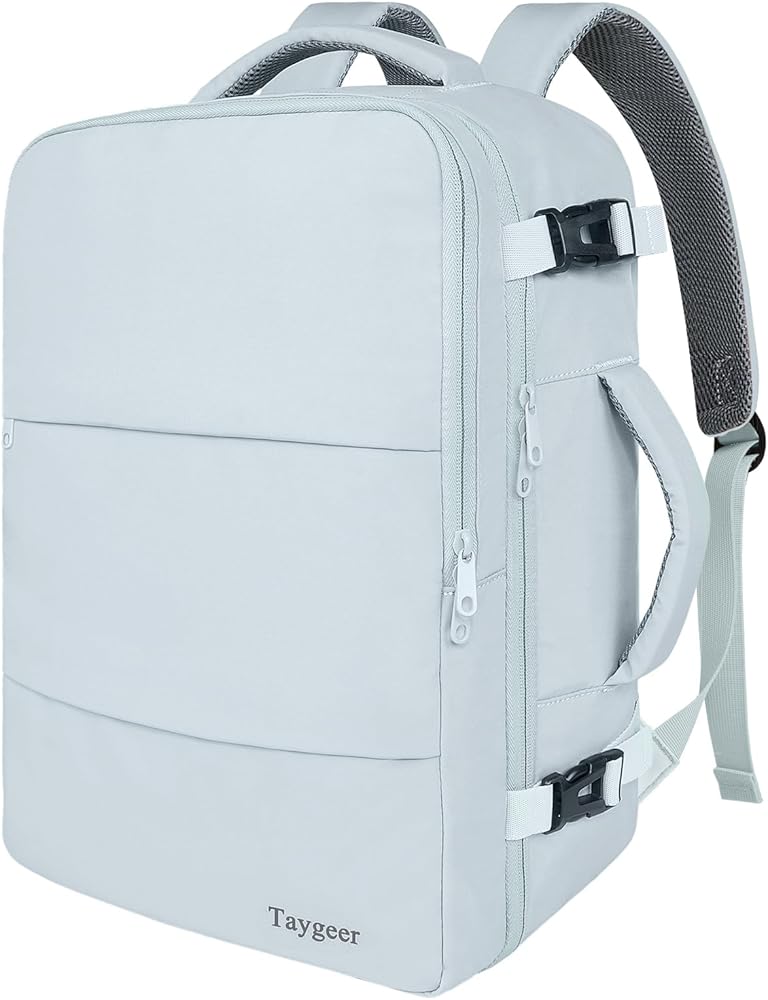
A soft backpack squeezes into sizers that a rigid case will not, which is part of why backpacks survive strict gate checks. This is a low-cost way to try the backpack approach.
Best for: budget-airline flyers and short trips where flexibility beats structure.
Why it works for air travel: soft sides compress into a sizer, and your hands stay free on stairs and buses.
What to check before buying: check it still fits the limit once it is full, since a stuffed backpack expands.
Who should avoid it: travellers with back or shoulder issues who should not carry weight that way.
9. Amazon Basics Carry-On Travel Backpack — Best laptop travel backpack
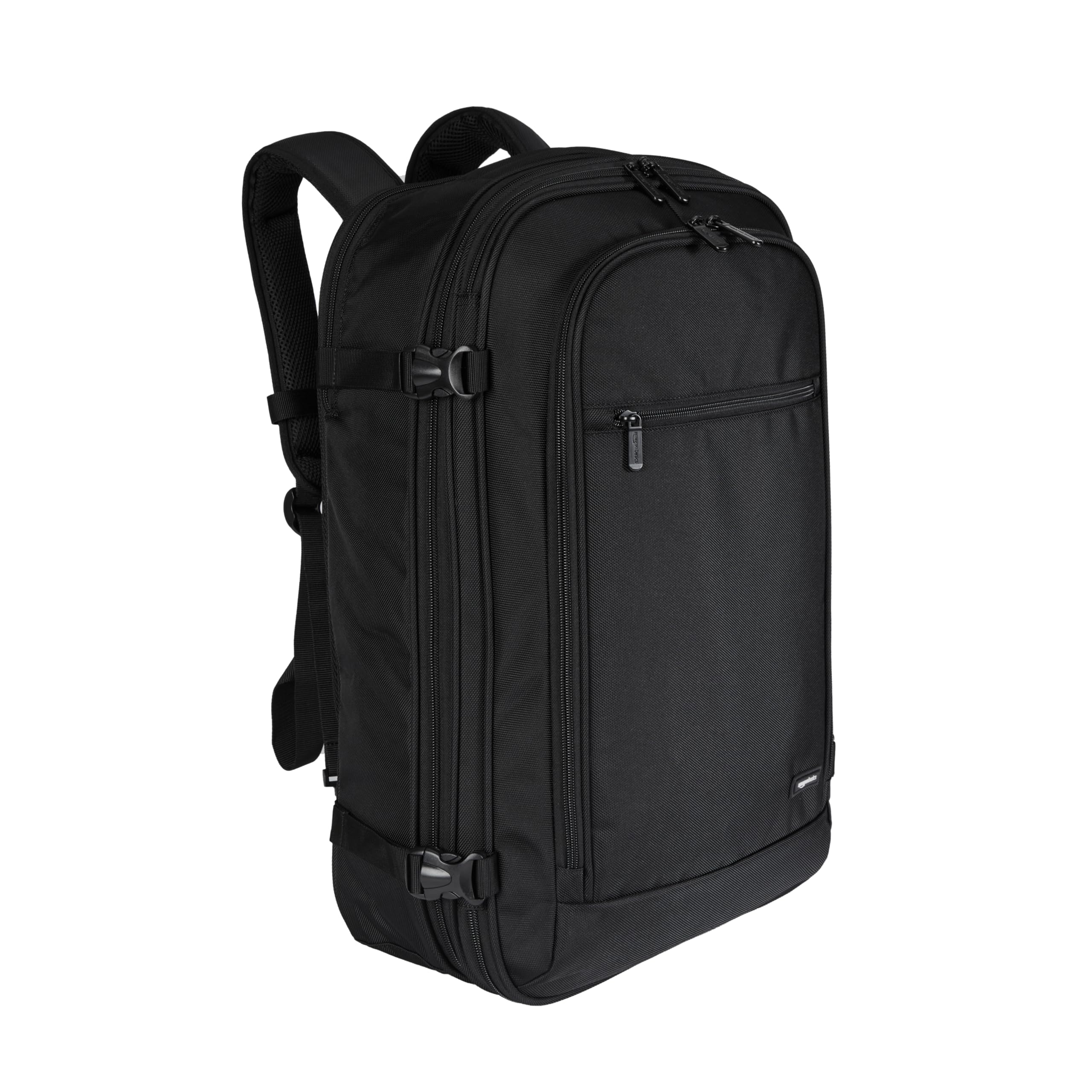
If you like the backpack idea but carry a laptop, look for one built around a padded sleeve. This one is aimed at that use, with a layout for tech and a few days of clothes.
Best for: digital workers, students and short-trip flyers who want hands free.
Why it works for air travel: a dedicated laptop section helps at security, and a backpack handles stairs and crowded boarding well.
What to check before buying: backpacks have less structure than a case, so packing takes more thought. Check the latest size and weight details on the Amazon product page before buying.
Who should avoid it: anyone who would rather roll a bag than carry it across a big airport.
10. American Tourister Rejoy Spinner — Best value branded suitcase
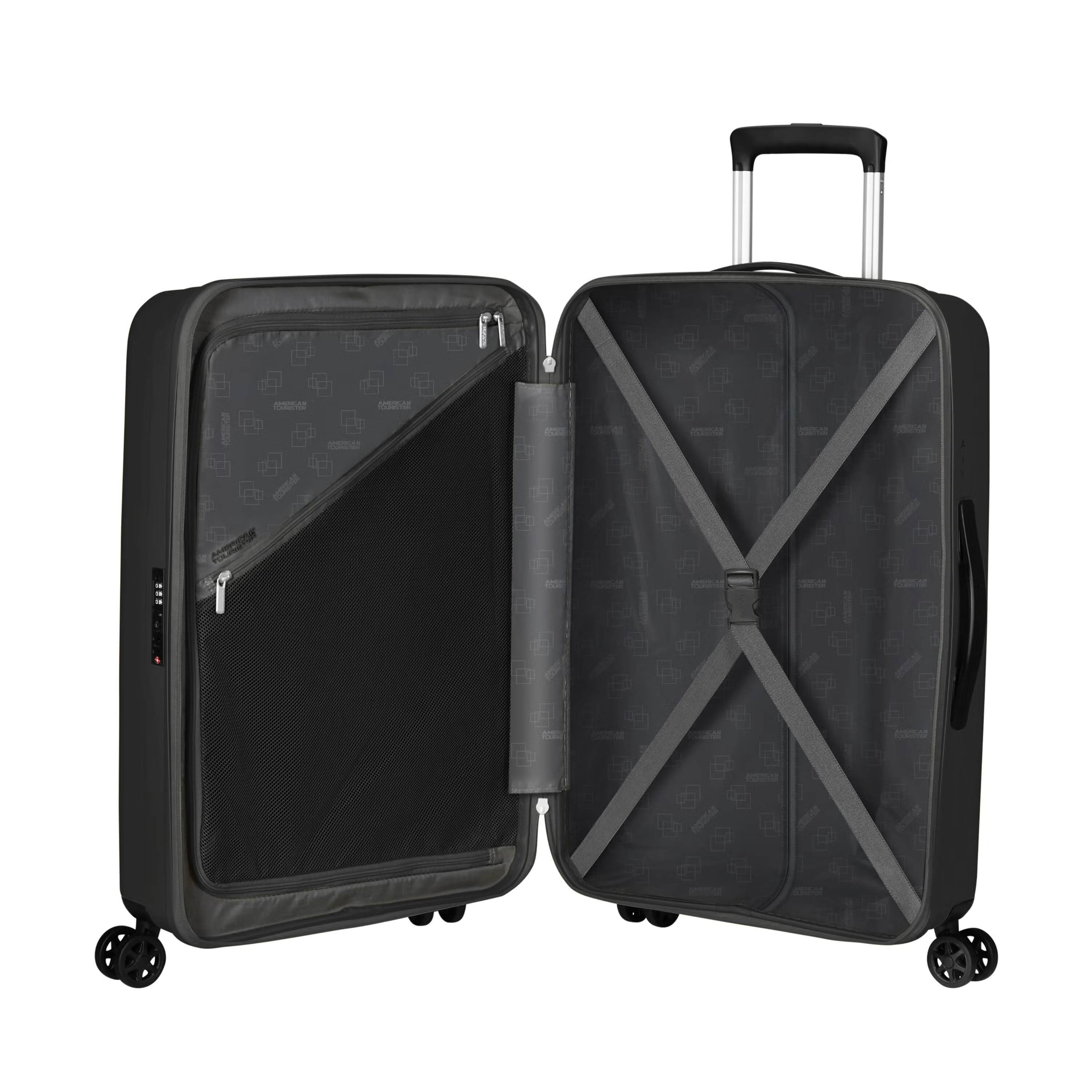
This sits in the middle: a known brand, a hard shell, spinner wheels and a built-in combination lock, without a top-tier price. A reasonable pick if you want a recognised name but do not need the flagship model.
Best for: travellers who want brand reliability at a fair price.
Why it works for air travel: the integrated lock is handy if you have to check it at the gate, and spinner wheels keep it easy to steer.
What to check before buying: it is a mid-range bag, so do not expect flagship materials. Confirm the cabin size for your airlines.
Who should avoid it: travellers who want the lightest or most hard-wearing option and will pay more for it.
Best Cabin Bag for Low-Cost Airlines
Low-cost airlines are where cabin bags get expensive if you guess. They tend to be stricter on size, they enforce it at the gate, and the fee for an oversized bag is usually far more than a checked bag booked in advance.
If you fly Ryanair, Wizz Air, easyJet or similar carriers, read your fare carefully. Many basic fares only include a small underseat bag, and a larger cabin bag is a paid add-on. The best cabin bag for Ryanair-style fares is often a compact cabin suitcase or an underseat bag that clearly fits the current limit, not the biggest case you can find.
Measure your packed bag at home against the airline stated size, wheels and handles included.
Soft bags and backpacks have a small edge here, because they flex into a sizer while a hard shell is judged at its exact dimensions.
Best Cabin Bag for Long Layovers
A long layover changes what you want from a bag. On a quick point-to-point hop, capacity is king. On a five-hour connection, how the bag moves matters more.
During a long layover you might walk between distant terminals, leave and re-enter the secure area, step outside to a designated area, or settle into a lounge to work. SmokingAirports.com exists to help with exactly this kind of terminal navigation, and the bag you are dragging behind you is part of the experience.
For layovers, lighter luggage is easier to live with. A bag you can lift onto a train, carry up stairs when a lift is busy, or keep beside you in a cafe is less tiring over a long wait. This is where underseat bags and well-packed backpacks shine, and where a heavy, overpacked case becomes a chore. If you know you will be moving around a terminal for hours, pack lighter than you think you need.
Best Cabin Bag for Business Travellers
Business travel rewards bags that keep you organised and moving. What matters most:
Laptop access: a sleeve you can reach at security without unpacking.
Front pockets: for documents, a charger and anything you grab often.
Easy airport movement: smooth wheels or a comfortable carry, so you are not fighting your bag between gates.
A cabin suitcase with a front pocket, like the Antler, suits people who roll a bag and want quick tech access. A structured laptop backpack suits those who would rather keep their hands free through connections. Either way, prioritise quick access over raw space, because most work trips are short.
Cabin Suitcase vs Travel Backpack
There is no single winner, just trade-offs.
A cabin suitcase is better when:
You are in large airports with long, smooth walks.
You want to keep weight off your back.
You like a clamshell that packs flat and stays organised.
A travel backpack is better when:
You face stairs, buses to remote stands, or cramped budget flights.
You are on a short trip and value flexibility over capacity.
You want soft sides that flex into a strict sizer.
A rough rule: choose a suitcase for big-airport, longer trips, and a backpack for budget airlines, stairs and quick getaways. If you do both, many people end up owning one of each.
Final Recommendation
If you want a shortlist instead of ten options, start here:
Best overall: Travelpro Maxlite 5 — light, reliable and easy to live with on mixed trips.
Best hard-shell: Samsonite Freeform — for protecting electronics and fragile items.
Best budget: Amazon Basics Hardside Cabin Suitcase — covers the basics without overspending.
Best underseat option: Amazon Basics Underseat Rolling Bag — ideal for short trips and strict fares.
Best backpack: Amazon Basics Carry-On Travel Backpack or Taygeer Underseat Cabin Backpack — for stairs, buses and hands-free travel.
Whatever you choose, the bag is only half the job. Check your airline current cabin baggage rules before you fly, measure your packed bag, and confirm the size and weight on the product page before buying. Rules change, and the cheapest way to avoid a gate fee is to know the limit before you get there.