


 New Zealand smoking and vape rules for travellers (2026)
New Zealand lets travellers aged 17 or over bring in 50 cigarettes, or 50 grams of cigars or tobacco, without paying duty. Anything above that must be declared, and tobacco you do not declare is seized and destroyed.
Facts checked on November 13, 2026
| Cigarettes duty-free | 50 per traveller aged 17 or over |
|---|---|
| Cigars and tobacco | 50 g, or 50 g of a mixture of all three; the limits are alternatives, not additions |
| Vapes | Legal for adults; we found no published traveller limit |
| Heated tobacco (IQOS etc.) | Legal; counts as vaping under the smokefree law |
| Inside airport terminals | Banned in enclosed waiting areas, queues and lounges |
| Smoking in public | Banned inside workplaces, in school grounds and in cars carrying under-18s |
| Smoking or vaping in a car with a child | NZ$50 infringement fee, or a court fine up to NZ$100 |
Smoking areas by airport
See all airportsPlan the rest of your trip
Partner links · we may earn a commission
The tobacco allowance at arrivals
| Product | Duty-free limit | Condition |
|---|---|---|
| Cigarettes | 50 | Aged 17 or over |
| Cigars or tobacco products | 50 g | Instead of the cigarettes, not on top of them |
| A mixture of cigarettes, cigars and tobacco | 50 g in total | Aged 17 or over |
New Zealand Customs sets the limit at 50 cigarettes, or 50 grams of cigars or tobacco products, or 50 grams of a mixture of all three. You must be 17 to claim a tobacco concession, although you have to be 18 to buy tobacco in New Zealand. Concessions do not apply to goods you carry for another person or for sale.
You may bring in more than the limit. Declare it on your New Zealand Traveller Declaration, and you pay duty and GST on the excess only; the first 50 cigarettes or 50 grams stay duty-free. The alternative is to put the surplus in one of the disposal bins in the arrivals areas, where it is destroyed. On a cruise, the limit applies at the point you leave the ship.
Tobacco over the limit that you do not declare is seized and destroyed, and Customs says you may be fined or prosecuted. It publishes no fixed penalty amount for travellers.
Vapes and e-liquid
Vaping is legal for adults and is regulated by the Smokefree Environments and Regulated Products Act 1990, as amended. The Act forbids selling any regulated product to someone under 18, and the Ministry of Health lists a ban on disposable vaping devices among the recent changes, alongside limits on advertising and shop displays. Where the Act bans smoking it bans vaping too: it defines “to vape” as inhaling using a vaping device or a heated tobacco product.
What we could not find is a traveller rule for a personal vape. The Ministry for Primary Industries says e-cigarettes are allowed if they are clean and free of biosecurity contamination such as soil or insects. The Customs list of prohibited items includes “vaporisers and their parts” in its section on cannabis and methamphetamine equipment, and allows vaporisers approved as a medical device by an overseas regulator. It does not say how a nicotine vape is treated, and none of the official pages we read gives a limit on e-liquid volume or nicotine strength for personal use. The nicotine and flavour rules in the Act apply to products notified for sale.
Two practical points follow. If you are unsure about a device or a stock of e-liquid, tick the declaration box and let an officer look at it; that is cheaper than a seizure. And if the vape comes on a flight with you, cabin rules apply as well: see can you bring a vape on a plane.
Heated tobacco
The Act defines a heated tobacco product as a smokeless tobacco product with a device that uses heat to aerosolise nicotine from tobacco leaf directly. Using one counts as vaping for the smokefree rules, so you may use it only where vaping is allowed. Customs has no separate traveller rule for devices or sticks, and its pages do not say whether heatsticks are counted towards the 50 gram tobacco limit, so keep a pack to a quantity you would be comfortable declaring.
Where smoking and vaping are banned
The Smokefree Environments and Regulated Products Act bans smoking and vaping in these places:
- The internal areas of workplaces, section 5.
- School grounds and the entrances to school buildings, section 7A.
- Internal commercial flights, where the operator must not allow anyone to smoke or vape, section 8.
- Booking areas, passenger queuing areas, waiting rooms and lounges inside an enclosed travel terminal, section 11. This one binds the passenger as well as the owner of the area.
- A motor vehicle on a road that carries anyone under 18, section 20D.
The car rule matters to anyone who hires a vehicle. It applies whether the car is moving or stopped, and the penalty is a NZ$50 infringement fee or a court fine of up to NZ$100. The only exceptions are a driver who is the sole occupant under 18, and a motor home being used as a dwelling.
Open areas are treated differently. The Ministry of Health defines an internal area as one completely or substantially enclosed by a roof or overhead surface and by walls, sides or screens, and an open area as anything else. A space with no roof is open by definition, and for borderline cases the Ministry asks whether a reasonable person would call the area open or internal. Smoking is generally allowed in open areas unless the owner or occupier bans it, so look for signs. We have not checked outdoor smokefree rules set by individual councils.
An unpaid infringement fee is referred to court, where costs are added. The Ministry gives the example of a NZ$500 fee growing to NZ$632.
Smoking at New Zealand airports
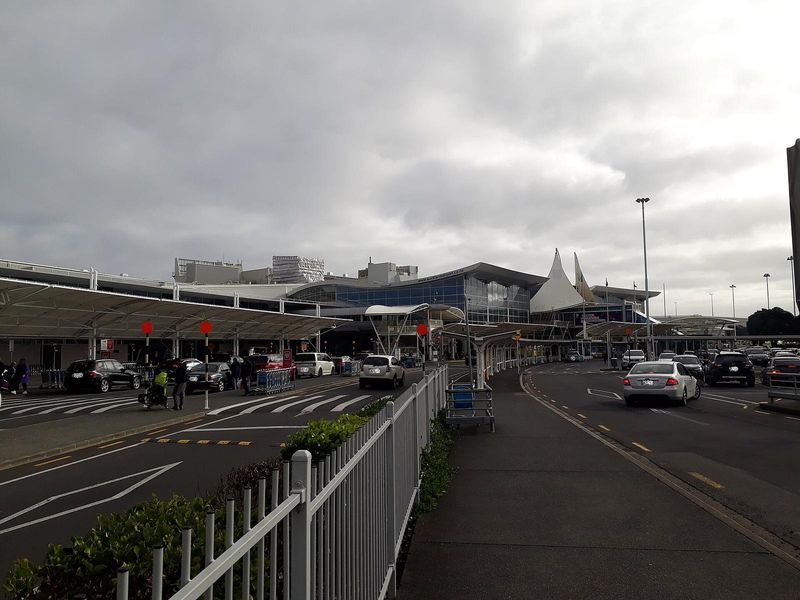
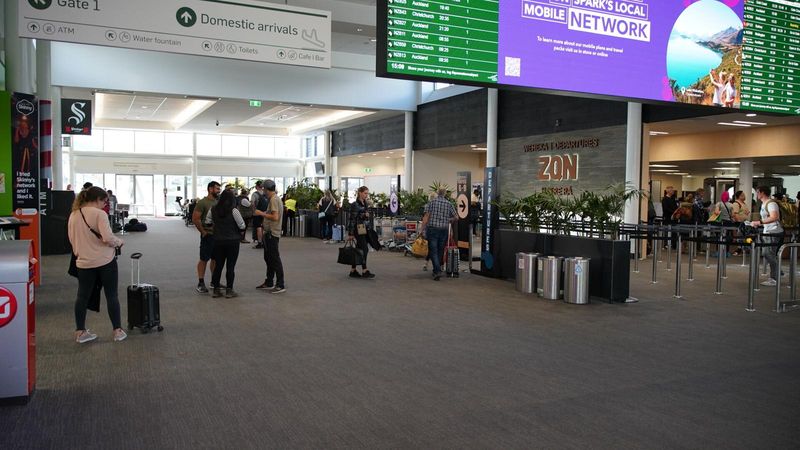
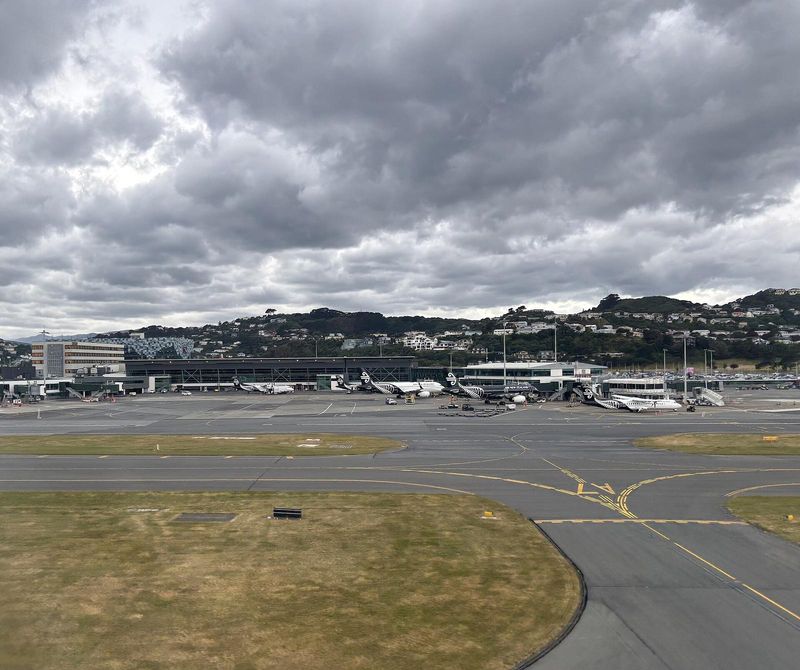
Because section 11 covers enclosed waiting areas, queues and lounges, smoking at a New Zealand airport happens outdoors, in an open area. Which outdoor spots are open, and whether any is on the departure side of security, differs by airport. The details are on our airport pages for Auckland, Christchurch, Wellington and Queenstown.
Bringing cigarettes home from New Zealand: allowances
Limits are per adult arriving by air, for personal use. The rule that applies is the one of the country you land in.
| Arriving in | Cigarettes | Cigars | Loose tobacco (g) | Minimum age | Source |
|---|---|---|---|---|---|
| United Kingdom | 200 | 50 | 250 | 17 | gov.uk |
| Ireland | 200 | 50 | 250 | not confirmed | revenue.ie |
| United States | 200 | 100 | not confirmed | 21 | cbp.gov |
| Canada | 200 | 50 | 200 | 18 | cbsa-asfc.gc.ca |
| Australia | 25 | not confirmed | 25 | 18 | abf.gov.au |
Other countries
| Arriving in | Cigarettes | Cigars | Loose tobacco (g) | Minimum age | Source |
|---|---|---|---|---|---|
| Germany | 200 | 50 | 250 | 17 | zoll.de |
| Austria | 200 | 50 | 250 | 17 | bmf.gv.at |
| Switzerland | 250 | 250 | 250 | 17 | bazg.admin.ch |
| Netherlands | 200 | 50 | 250 | 17 | douane.nl |
| Belgium | 200 | 50 | 250 | 17 | fin.belgium.be |
| France | 200 | 50 | 250 | 18 | service-public.gouv.fr |
| Italy | 200 | 50 | 250 | 17 | europa.eu |
| Spain | 200 | 50 | 250 | 17 | sede.agenciatributaria.gob.es |
| Portugal | 200 | 50 | 250 | 17 | info.portaldasfinancas.gov.pt |
| Poland | 200 | 50 | 250 | 17 | gov.pl |
| Sweden | 200 | 50 | 250 | 18 | tullverket.se |
| Denmark | 200 | 50 | 250 | 17 | toldst.dk |
| Norway | 100 | not confirmed | 125 | 18 | toll.no |
| Finland | 200 | 50 | 250 | 18 | tulli.fi |
| Greece | 200 | 50 | 250 | 17 | europa.eu |
| Czech Republic | 200 | 50 | 250 | 17 | celnisprava.gov.cz |
| Turkey | 600 | 50 | 250 | 18 | ggm.ticaret.gov.tr |
| Russia | 200 | 50 | 250 | 18 | eec.eaeunion.org |
| Japan | 200 | 50 | 250 | 20 | customs.go.jp |
| South Korea | 200 | not confirmed | not confirmed | 19 | customs.go.kr |
| China | 400 | 20 | 500 | 18 | english.cq.gov.cn |
| Taiwan | 200 | 25 | 454 | 20 | web.customs.gov.tw |
| Hong Kong | 19 | 1 | 25 | 18 | customs.gov.hk |
| Singapore | 0 | 0 | 0 | not confirmed | customs.gov.sg |
| Thailand | 200 | not confirmed | 250 | not confirmed | donmueang.airportthai.co.th |
| Vietnam | 200 | 20 | 250 | not confirmed | lawnet.vn |
| Indonesia | 200 | 25 | 100 | 18 | beacukai.go.id |
| Philippines | 400 | 50 | 250 | not confirmed | assets.tobaccocontrollaws.org |
| Malaysia | 200 | not confirmed | 225 | not confirmed | aip.caam.gov.my |
| India | 100 | 25 | 125 | not confirmed | taxguru.in |
| Brazil | 200 | 25 | 250 | 18 | gov.br |
| Mexico | 200 | 25 | 200 | 18 | gob.mx |
| United Arab Emirates | 200 | 50 | 500 | 18 | dubaicustoms.gov.ae |
| Saudi Arabia | 200 | not confirmed | not confirmed | not confirmed | zatca.gov.sa |
| Egypt | 200 | 25 | 200 | not confirmed | customs.gov.eg |
Figures checked on November 12, 2026.
Best airports for smokers in New Zealand

Questions travellers ask
Can I bring a vape to New Zealand?
Vaping is legal for adults, and the Ministry for Primary Industries says e-cigarettes can be brought in if they are clean and free of biosecurity contamination. We found no published traveller limit on devices or e-liquid, so declare anything unusual and keep to personal use.
How many cigarettes can I bring into New Zealand?
Travellers aged 17 or over can bring 50 cigarettes, or 50 grams of cigars or tobacco products, or 50 grams of a mixture of all three, duty-free. You must declare anything over that and pay duty and GST on the excess.
Is vaping legal in New Zealand?
Yes. It is regulated by the Smokefree Environments and Regulated Products Act 1990, which bans sale to under-18s and bans disposable vaping devices. You may not vape where smoking is banned, such as inside workplaces, in enclosed airport waiting areas and in cars with anyone under 18.
Is IQOS legal in New Zealand?
Heated tobacco products are legal as smokeless tobacco. The Act counts using one as vaping, so the same places are off limits as for cigarettes and vapes.
Where can you smoke in New Zealand?
In open areas where the owner has not banned it. Smoking is banned inside workplaces, in school grounds, in enclosed airport terminal waiting areas and lounges, and in any vehicle on a road with a passenger under 18.
What happens if I do not declare tobacco in New Zealand?
Tobacco over the 50 cigarette or 50 gram limit that you do not declare is seized and destroyed. Customs says you may be fined or prosecuted. If you do declare it, you pay duty and GST on the excess or leave it in a disposal bin.
Sources
- New Zealand Customs Service – Duty-free shopping
- New Zealand Customs Service – What you can and can't bring
- Ministry for Primary Industries – Alcohol, cigarettes, tobacco, drugs and medicines
- Smokefree Environments and Regulated Products Act 1990
- Ministry of Health – Internal and open areas under the Act
- Ministry of Health – Paying or disputing an infringement notice
- Ministry of Health – About the Smokefree Act
Rules change. If something here is out of date, tell us and we will check it.