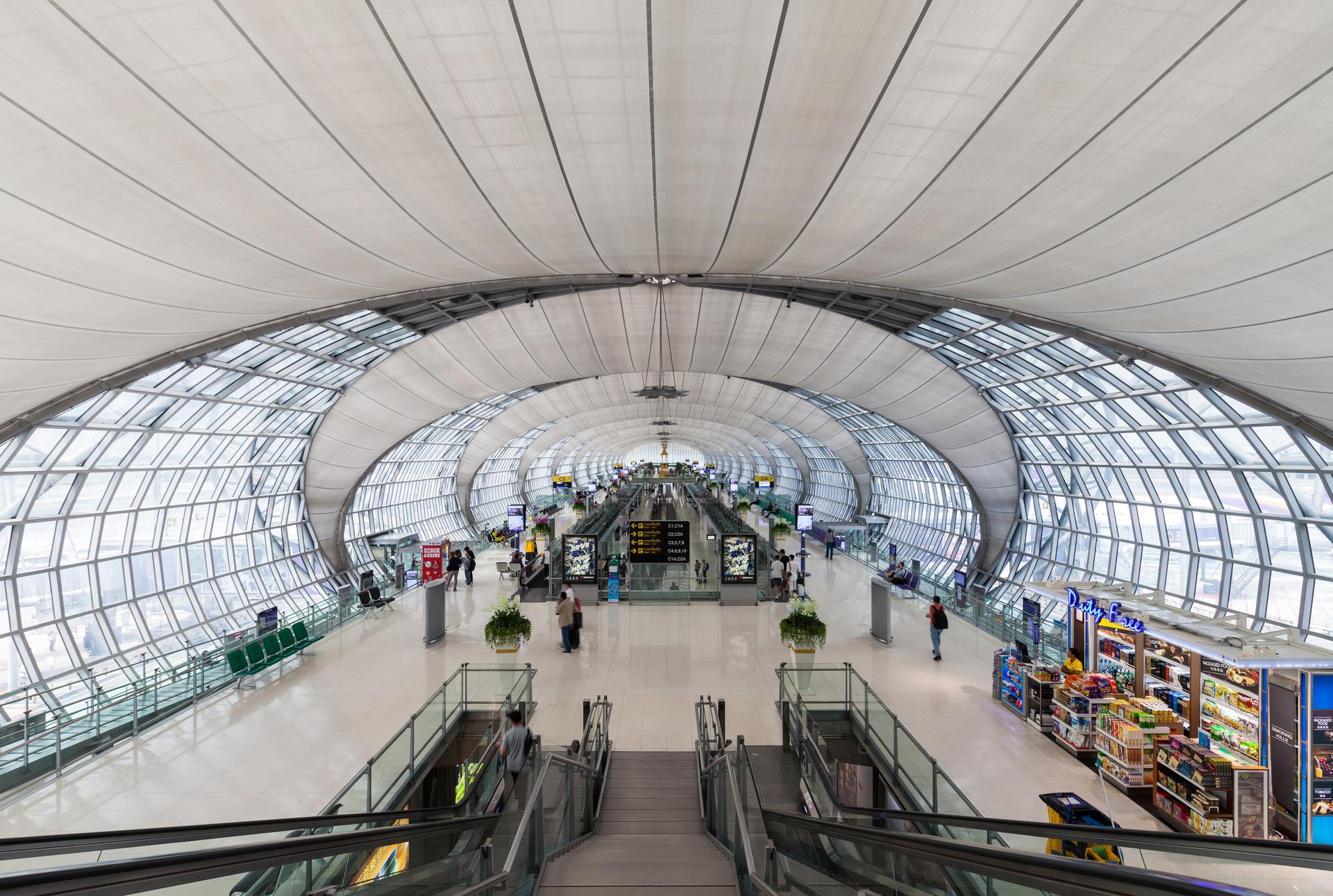
Bangkok has been hit by some of its worst flooding in years. Heavy rain started falling on Thursday 24 September, and by Sunday more than 300 mm had come down across the capital. By 26 September all 50 of Bangkok's districts had been declared flood-affected. Roads have turned into rivers, some neighbourhoods have been cut off, and tens of thousands of households have been affected.
If you are flying into or out of Bangkok this week, you probably have three questions. Are the airports open? Will my flight leave on time? And, if you are a smoker facing a long wait, where can I actually smoke? This guide answers all three, using the latest reports from Thai authorities and airlines, plus our own detailed data on the smoking areas at Suvarnabhumi (BKK) and Don Mueang (DMK).
Information in this article is correct as of 28 September 2026. The situation is changing quickly, so always confirm your flight directly with your airline before you set off.
Quick answers
Both Bangkok airports are open. Suvarnabhumi and Don Mueang have operated throughout the floods, and aircraft are taking off and landing normally.
Flights are delayed, mostly at Suvarnabhumi. The problem is on the ground: staff shortages and baggage handling, not the runways.
Getting to the airport is the hardest part. Several main roads are flooded. Leave far earlier than usual and use rail where you can.
Many airlines are offering free date changes for flights between 26 and 29 September.
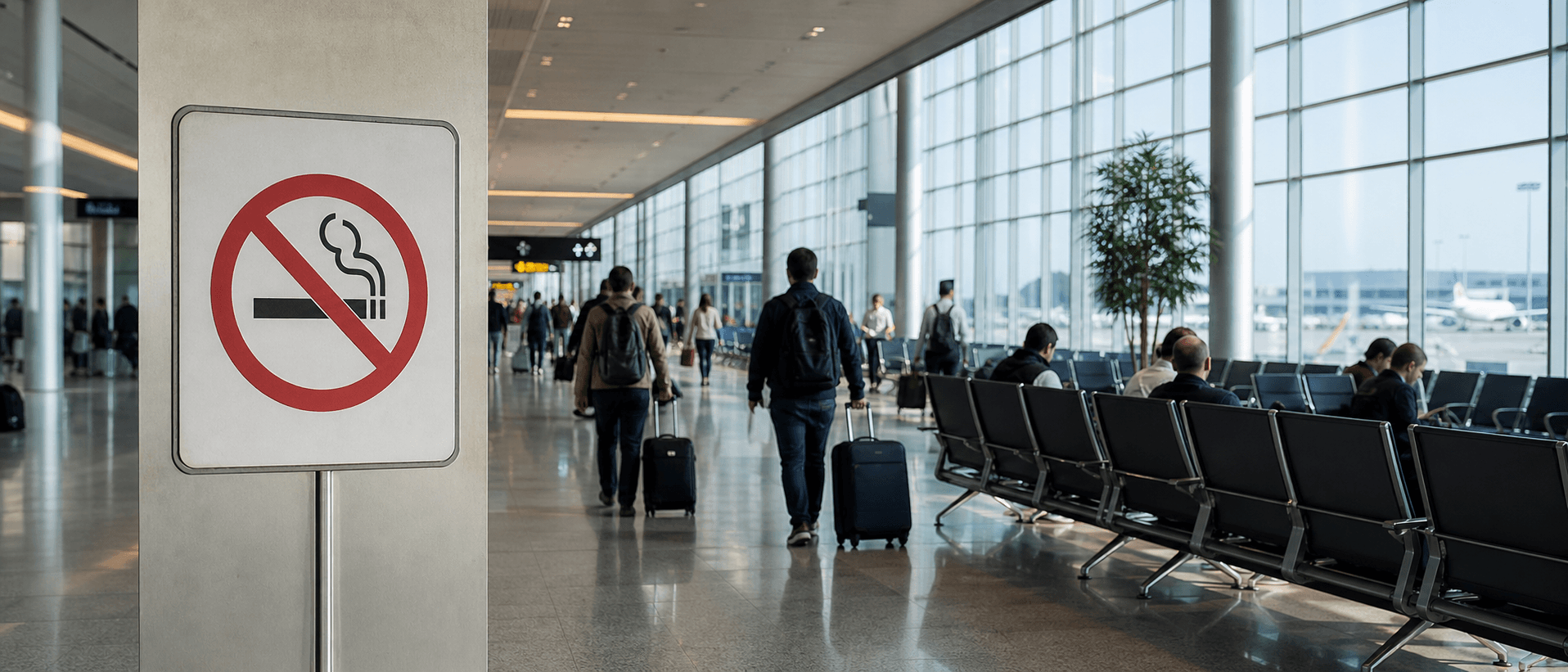
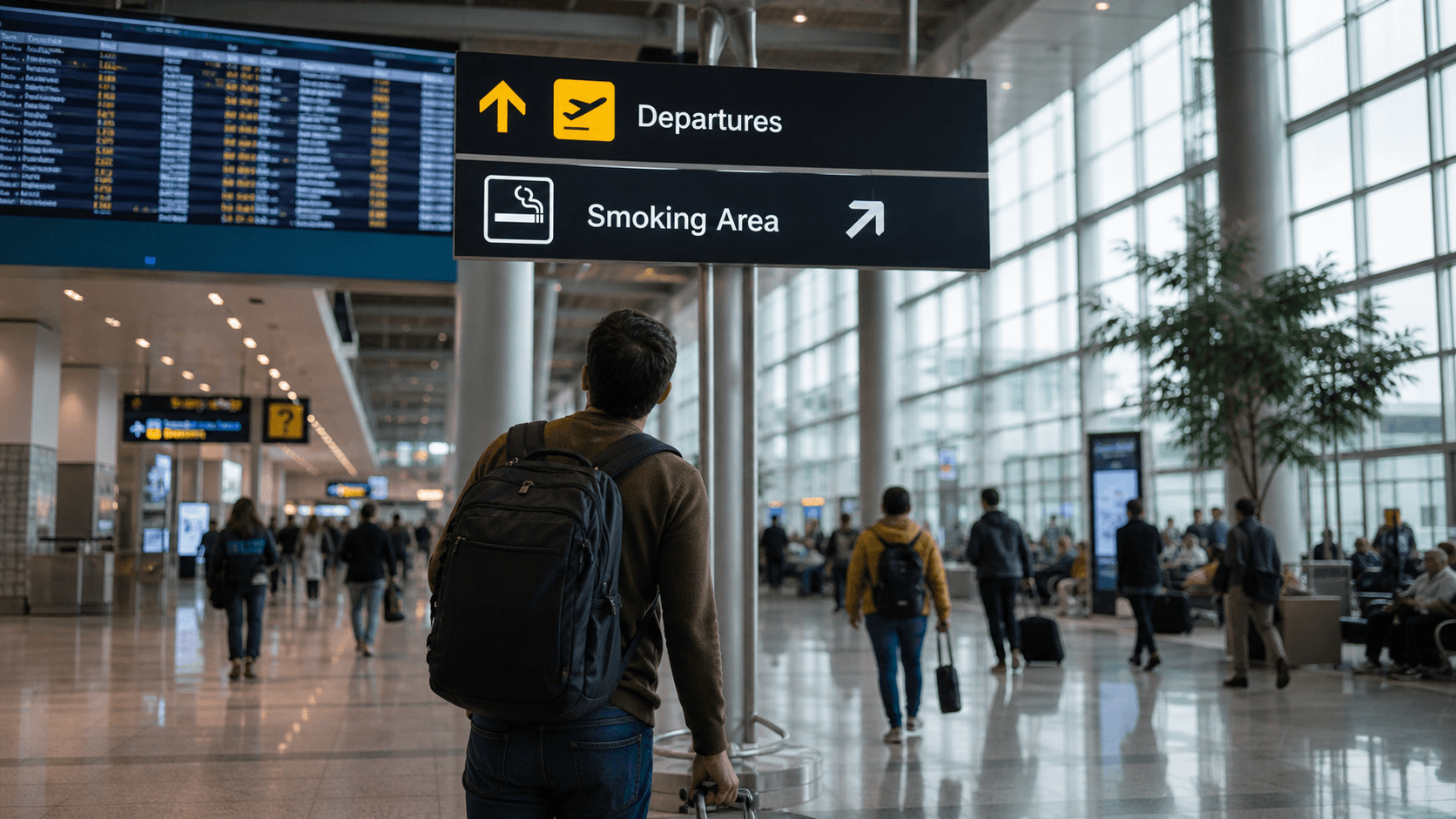
At Suvarnabhumi, every official smoking area is outdoors and before security. After security, the only place to smoke is a paid lounge.
At Don Mueang, there is nowhere to smoke after security, and you cannot go back out. Smoke before you check in.
Vaping is illegal everywhere in Thailand, including at airports.
What happened
The rain that caused the flooding arrived on the afternoon of Thursday 24 September and kept falling through the weekend. Different reports put the total between roughly 300 mm and 330 mm between Thursday and Sunday, which is more than Bangkok normally receives in an entire month. The city's drainage system could not cope. Water rose across central neighbourhoods including Sathorn, Phetchaburi and Sukhumvit, and across the northern and eastern suburbs on the way to both airports.
Bangkok's authorities declared every one of the city's 50 districts flood-affected. Around 52,000 households were affected by the weekend, and around 4,900 people were sheltering in more than 200 evacuation centres. Convenience stores in some areas ran short of food and bottled water, some restaurants closed, and food delivery services slowed down. Rail stations including Hua Lamphong, Bang Sue and Krung Thep Aphiwat were prepared to shelter people displaced by the floods.
Thailand's Civil Aviation Authority (CAAT) issued a warning on Saturday 26 September that the rain could disrupt both travel to Bangkok's airports and flight operations. The Transport Ministry set up a 24-hour Emergency Flood Response Operations Centre to coordinate roads, railways, waterways and airports across the country.
Are Bangkok's airports open?
Yes. Both of Bangkok's international airports have remained open throughout the floods.
At Suvarnabhumi (BKK), the main international airport, the runways and terminals have not flooded. Flights are operating, although many have been delayed, as explained below.
At Don Mueang (DMK), the older airport in the north of the city that mainly serves low-cost airlines, water flowed onto part of the southern taxiway. According to the Transport Ministry, aircraft have continued to take off and land normally.
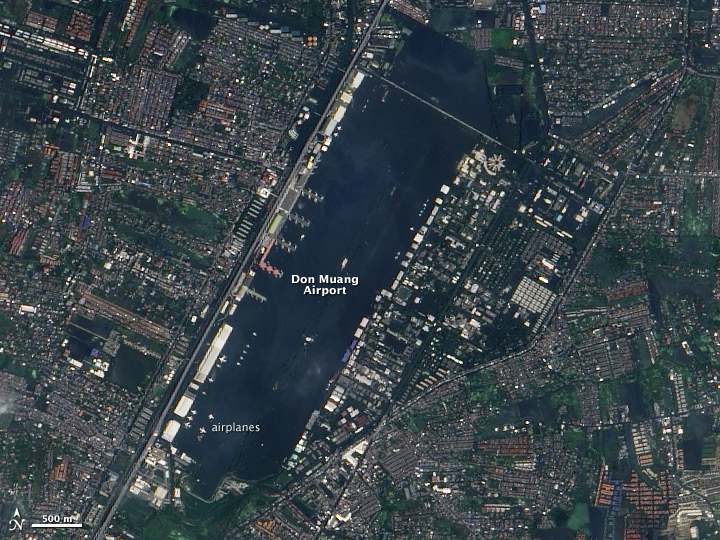
It is important to understand what "open" means in this situation. The airports themselves can operate, but the city around them is struggling. The biggest risks to your trip are getting to the airport on time, delays caused by staff who cannot get to work, and slow baggage handling. Plan for all three.
Why flights at Suvarnabhumi are delayed
The problems at Suvarnabhumi are mostly on the ground rather than in the air. According to the airport and Thai Airways, flooding across the city stopped many ground-handling staff from getting to work. Ground handlers load and unload bags, move equipment and prepare aircraft for departure, so when there are not enough of them, flights leave late and bags come out slowly.
At the same time, several Thai Airways baggage carts broke down, which disrupted the loading, handling and transfer of luggage for both departing and arriving flights. Arriving passengers reported long waits at baggage claim, and some bags were left uncollected.
Some of the delays have been very long. Hundreds of Korean passengers booked on Thai Airways flights home were stuck at Suvarnabhumi for more than 14 hours, from Sunday night into Monday morning. One flight scheduled to leave at 11:10 pm on Sunday was pushed back several times, first to 1:40 am, then 3 am, then 4 am and finally 6:10 am. Passengers complained that they received little information during the wait. Khaosod English also reported that members of Thailand's national team travelling to the 2026 Asian Games in Nagoya were held at the airport for hours because their baggage and sports equipment could not be loaded.
Suvarnabhumi says it is working with Thai Airways to bring in more ground staff, repair the faulty baggage carts, supply replacement equipment, and display baggage status updates in the terminal.
If you are flying from Suvarnabhumi in the next few days, and especially with Thai Airways, prepare for the possibility of a long wait. Bring food, water, medication and a charged power bank, and read the section below on where you can smoke before and after security.
If your bag has not arrived
If you have landed at Suvarnabhumi and your checked bag has not come out, contact Thai Airways Lost and Found:
International flights: 02-134-5453 to 55
Domestic flights: 02-134-5473 to 74
Thai Airways Contact Centre (24 hours): 02-356-1111, or +66 2 356 1111 from outside Thailand
For general airport questions, Airports of Thailand (AOT) runs a 24-hour contact centre on 1722.
Before you leave the baggage hall, file a report at the airline's baggage service desk and keep a copy of the reference number. You will need it to track your bag and to claim any costs later.
Getting to the airport
For most travellers, getting to the airport is harder than the flight itself. Several of the main routes to the airports have been flooded, including Vibhavadi Rangsit Road, the Don Mueang to Vibhavadi corridor, Srinakarin Road and the Rangsit area. Authorities have closed some lanes and roads while they pump water away. Taxis and ride-hailing cars have kept operating, but journeys are taking much longer than normal. Some travel advisers are recommending that you allow up to three times your usual travel time.
Rail is the most reliable option. On 26 September, the MRT Blue, Purple, Yellow and Pink lines were all running normally, and the elevated BTS Skytrain continued to operate above the flooded streets. The CAAT has specifically advised passengers to use rail-based public transport where they can. Underground stations can be affected by water near the entrances, so check the operator's announcements before you set off.
Mainline rail services have been more mixed. The Southern and Northeastern lines were unaffected on 26 September, but the Eastern and Northern lines had service changes because of flooded tracks.
Practical tips for the journey:
Check your flight status before you leave, not when you arrive.
Leave at least two to three times earlier than you normally would.
Use the BTS or MRT for as much of the journey as possible, and take a taxi or ride-hailing car only for the final stretch.
Avoid flooded roads. Driving through deep water can stall a car and leave you stranded.
Keep your phone charged and save your airline's contact details offline.
Your rights if your flight is delayed
Thailand has its own rules on passenger care. Under Civil Aviation Board Regulation No. 101, airlines must look after passengers whose flights are delayed or cancelled, including when the cause is bad weather. Depending on how long the delay is, this can include food and drinks, access to phone calls or internet, alternative travel arrangements, or a refund.
Severe weather is generally treated as outside an airline's control, so you should not expect cash compensation for the delay itself. However, the duty to provide care and assistance still applies. If you are stuck at the airport for hours, ask your airline's staff what they are providing, keep your receipts for anything you have to buy, and ask for written confirmation of the delay.
If you have travel insurance, check whether your policy covers travel delay, missed connections or delayed baggage, and keep every receipt and every piece of paperwork the airline gives you.
Changing your flight for free
Several airlines are letting passengers affected by the floods change their plans without paying a change fee. The main ones are:
Thai Airways: one free date change for tickets departing Bangkok between 26 and 29 September, on the same route and in the same class of travel, according to reports. Check the conditions with Thai Airways before you rebook.
Thai AirAsia (FD and XJ flights): one free change on the same route within 7 days, or the value of your booking kept in an AirAsia Credit Account for 2 years. This applies to flights on 26 to 28 September.
Nok Air: a free change within 30 days with no fare difference, or a voucher worth 100% of the ticket value, valid for 30 days. This applies to Don Mueang departures on 26 September.
Thai Lion Air: free rebooking within 30 days (fare differences may apply at holiday times), or a 30-day credit for missed flights. This applies to domestic and international flights on 26 to 28 September.
Thai Vietjet: one free change within 7 days on the same route, or a credit shell valid for 180 days. This applies to Suvarnabhumi flights on 26 to 28 September.
All of these airlines ask passengers to contact them directly to confirm the conditions for their booking. If you booked through a travel agent or an online booking site, you may need to contact them rather than the airline.
If your trip is not urgent, changing to a later date can save you a stressful journey through flooded streets and a long wait at the airport.
Stuck at Suvarnabhumi? Where you can smoke
If your flight is delayed for hours, a cigarette break can make the wait much easier. Suvarnabhumi is not a smoker-friendly airport, though, and it helps to know the rules before you go.
All indoor smoking rooms at Suvarnabhumi were closed permanently in February 2019. In 2025, Airports of Thailand tried to bring back trial indoor smoking rooms, but Thailand's National Tobacco Control Committee rejected the proposal. Today, smoking inside the terminal is not allowed anywhere. What remains is a handful of outdoor spots before security and one paid lounge after security.
The four official smoking areas (before security)
Suvarnabhumi has four officially designated smoking areas. All of them are outdoors, and all of them are on the 1st floor (the ground floor) of the terminal complex, before security:
In front of the Airport Police Station. This is one of the most established and clearly marked spots, with signage and dedicated ashtrays. On the 1st floor, find the Airport Police Station; the smoking area is directly in front of it.
In front of the Magic Food Court, near Gate 10. The food court is a popular budget dining spot and an easy landmark to find. The smoking area is directly in front of the food court entrance, with visible signage. It is a good choice if you want to eat and smoke in the same trip.
Parking Building Zone 2. Take the pedestrian walkway from the main terminal on the 1st floor towards Parking Building Zone 2. The smoking area is on the 1st floor of the parking building.
Parking Building Zone 3. At the opposite end of the parking complex from Zone 2, and slightly further from the main terminal entrance. Follow the same walkway towards Zone 3.
Other spots travellers use
Travellers also report several tolerated spots. These are not officially designated, but ashtrays are present and airport staff reportedly direct smokers to some of them:
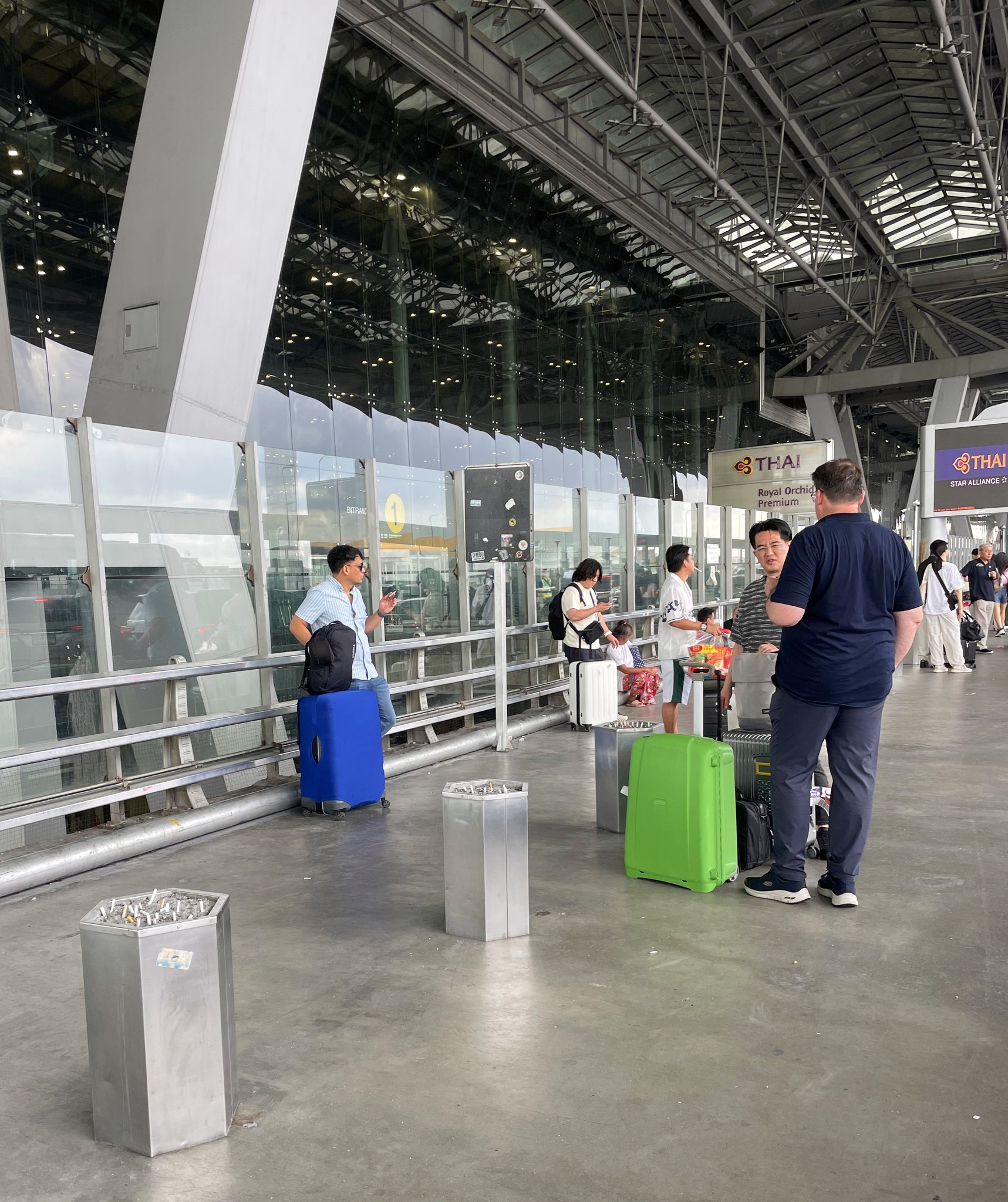
The departures curb near Door 1 and Door 10. On the departures level (Level 4), walk to the far end of the curb towards Door 1 or, at the other end of the terminal, Door 10. Look for ashtray stands on the pavement. This spot is under the terminal canopy but open to the air.
The S1 bus stop on the ground level. Go down to the lowest level of the terminal and head for the public bus stop for the S1 bus to Khaosan Road. The smoking spot is near the bus stop, under a covered overhang by the road.
Near Entrance 8. From inside the terminal, find Entrance 8 on the ground floor and cross the pedestrian bridge towards the parking facility. The smoking area is on the right near the parking entrance. It is one of the quieter spots and can be hard to find without directions.
Smoking in heavy rain
With the current weather, shelter matters. All of Suvarnabhumi's smoking areas are outdoors, so on a stormy day you can get soaked on the way to a cigarette. The S1 bus stop spot is the best choice in heavy rain, because it sits under a covered overhang and is sheltered from rain. The Door 1 and Door 10 curb areas on the departures level are under the terminal canopy, which also gives some protection. The official spots in front of the police station, the food court and the parking buildings are more exposed.
After security: the Miracle Lounge
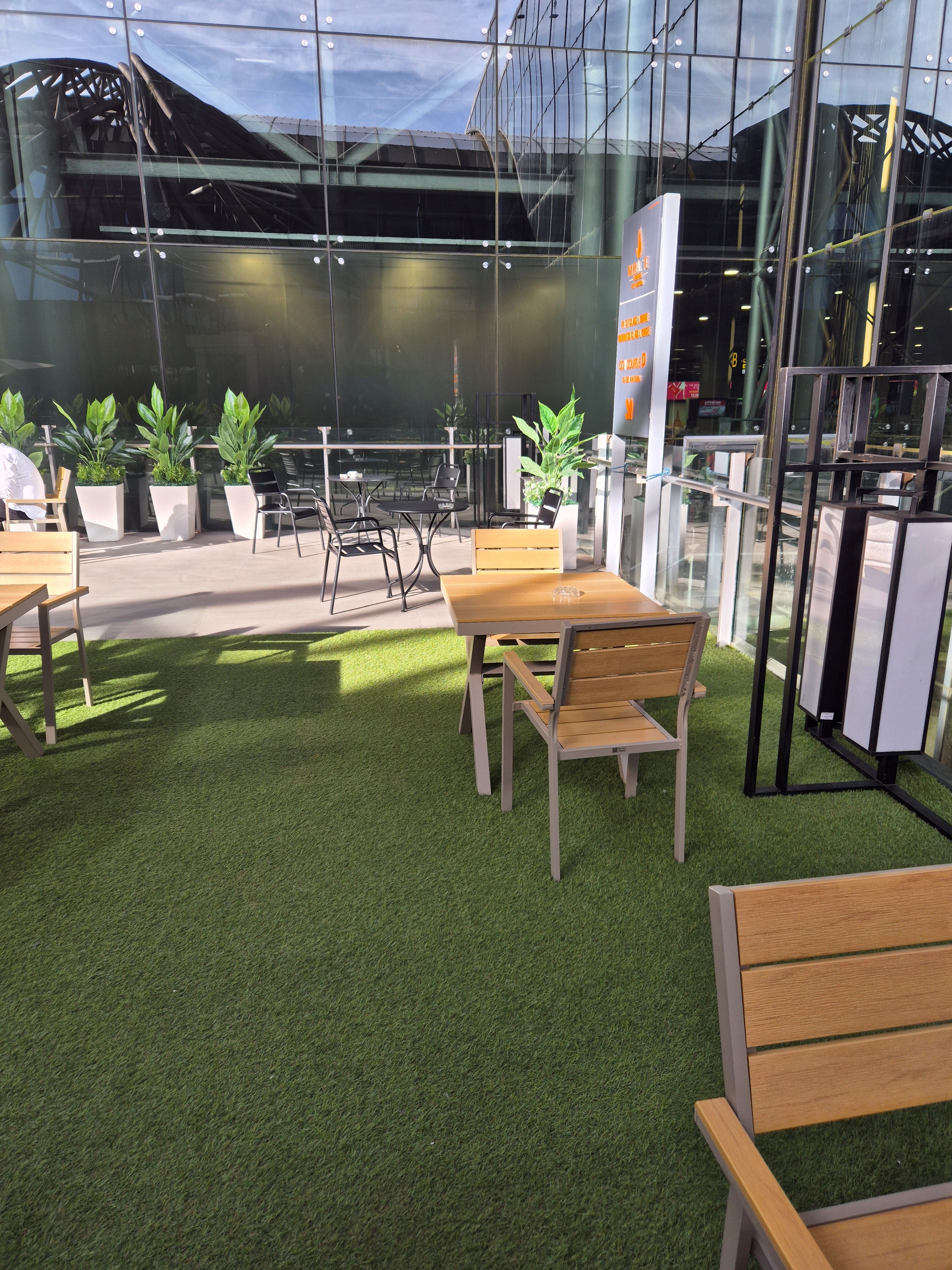
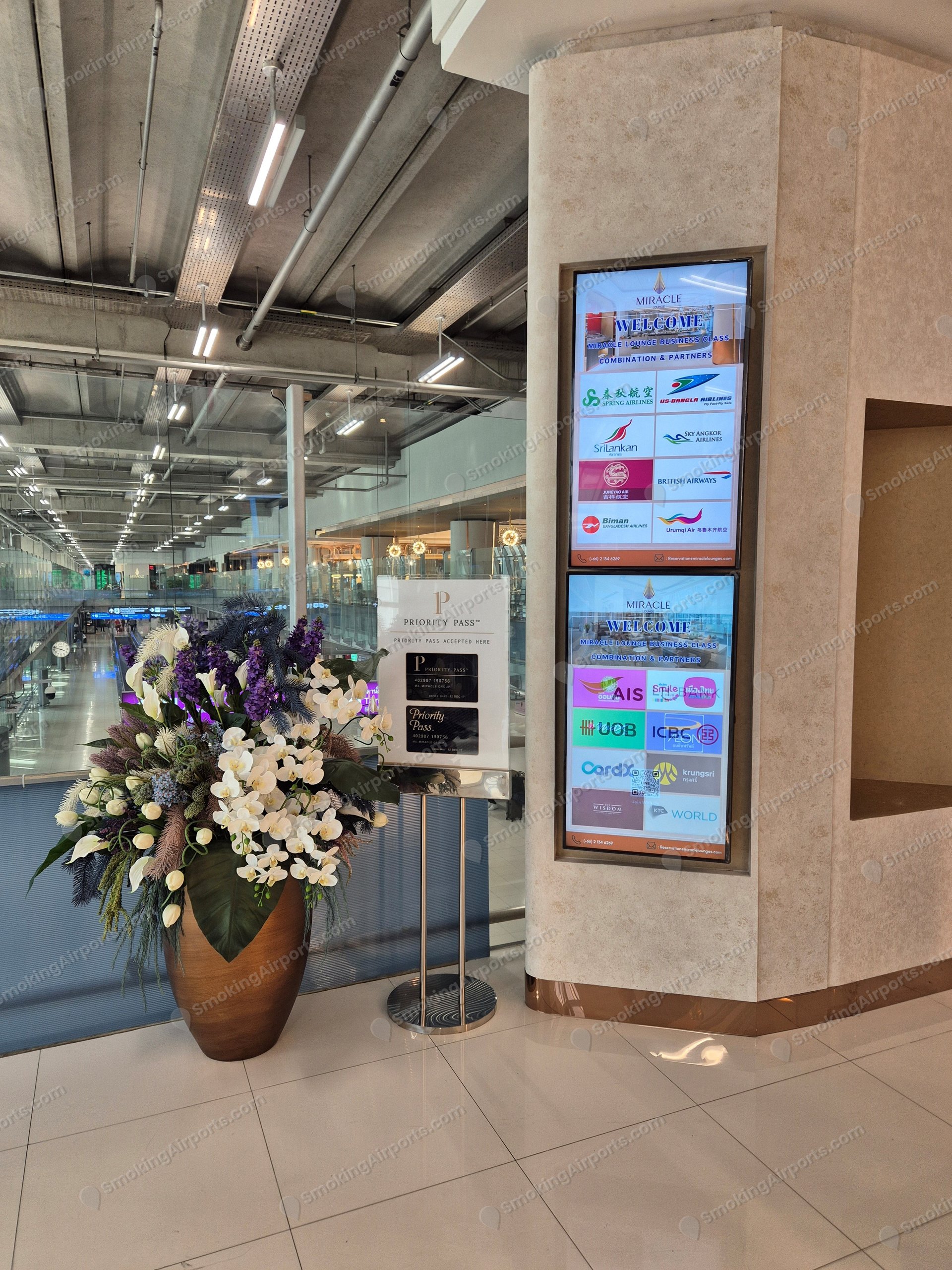
Once you have cleared immigration and security, there is only one reliable place to smoke at Suvarnabhumi: the Miracle Lounge near Gates D4 and D5, in the international departures area. It has an open-air smoking terrace with tables, chairs, artificial grass and potted plants.
Walk-in entry costs about 1,500 THB (around 42 US dollars). That includes food, drinks, Wi-Fi and up to two hours in the lounge. If you are facing a long delay after security, this can be good value. You can smoke, eat, charge your phone and sit somewhere comfortable instead of on the floor at the gate. To get there, head towards Concourse D after security, find the lounge entrance near Gates D4 and D5, and pay the walk-in fee at the desk.
What about the SAT-1 satellite terminal?
If your flight leaves from the SAT-1 satellite terminal (Gates S110 to S122), do not count on finding somewhere to smoke there. Reports are conflicting. Some travellers in early 2026 found informal smoking areas near these gates, while others found them closed or blocked. The indoor trial smoking rooms that AOT set up in SAT-1 in 2025 were removed after the tobacco control committee rejected the plan. If you need to smoke before a SAT-1 departure, do it before security.
Can you go back out to smoke?
Yes. At Suvarnabhumi you can leave the secure area and clear security again later. During the current disruption, though, security and immigration queues can be long and unpredictable. If you go back out to smoke, leave yourself plenty of time to get back to your gate, and keep checking the departure boards and your airline's app.
Rules to remember at Suvarnabhumi
Stay at least 5 metres from building entrances when you smoke.
Not every tolerated spot is marked. Look for ashtrays or ask airport staff.
Smoking outside the designated areas can lead to a fine of up to 5,000 THB (around 150 US dollars).
For photos, maps and the latest updates on every spot, see our full guide: smokingairports.com/airports/bangkok-suvarnabhumi-airport
Stuck at Don Mueang? Smoke before you check in
Don Mueang is stricter than Suvarnabhumi. Airports of Thailand closed all indoor smoking rooms at the six airports it manages on 3 February 2019, and Don Mueang has no smoking facilities of any kind after security. There are no smoking rooms, no outdoor terraces and no lounges with smoking areas airside. Once you have passed through the security checkpoint, you cannot smoke until you land, and you cannot go back out.
That makes timing very important at Don Mueang, especially while flights are delayed. Travellers report two places to smoke before security:
An outdoor smoking area outside the Terminal 1 check-in hall. Head to the far end of Terminal 1 on the ground floor, outside the check-in hall, before you go to the check-in counters or security. This area mainly serves international departures. There is no seating; expect a basic outdoor spot with ashtrays.
A smoking room in Parking Building 2, next to Terminal 2. Terminal 2 handles domestic departures. From Terminal 2, head towards Parking Building 2; a small, enclosed, container-style smoking room is reported on the ground floor of the parking structure. It is open to anyone before check-in or security, and because it is enclosed it is a better option in heavy rain.
Both spots are based on traveller reports rather than official airport signage, so their status can change. If you cannot find them, ask airport information staff.
Our advice for Don Mueang during the floods: check your flight status before you check in. If your flight is already delayed, stay landside, have your last cigarette, and go through security only when you need to. Once you are through, you will not be able to smoke again, however long the delay.
Full details for Don Mueang: smokingairports.com/airports/don-mueang-international-airport
Fines at Don Mueang are similar to Suvarnabhumi: smoking outside designated areas can lead to a fine of up to 5,000 THB, although some airport sources quote 2,000 THB.
If you are in transit through Bangkok
If you are changing planes at Suvarnabhumi on an international connection, you normally stay in the international transfer area and do not pass through Thai immigration. All of Suvarnabhumi's official smoking areas are landside, so reaching them would mean entering Thailand through immigration and then clearing security again. Depending on your nationality, entering Thailand may require a visa, and with the current delays the queues could be long.
For most transit passengers, the realistic option is the Miracle Lounge in Concourse D, which is inside the secure area. If your connection has been delayed by several hours, paying for lounge access may be the most comfortable way to wait.
If your connection involves changing airports, from Suvarnabhumi to Don Mueang or the other way round, allow a lot of extra time. The roads between the two airports are among those affected by flooding.
A warning about vaping
Vaping is not an option at any Thai airport. E-cigarettes, vapes, heated tobacco devices and all other electronic nicotine delivery systems are illegal in Thailand. Penalties can be as high as 10 years in prison or fines of up to 500,000 THB (around 15,000 US dollars), and Thai customs actively confiscates these devices at the airport.
If you are travelling through Bangkok with a vape in your luggage, you are taking a serious legal risk. Do not use one anywhere at the airport, even in a smoking area.
A checklist for flying from Bangkok this week
Check your flight status in your airline's app before you leave home or your hotel, and again on the way.
Consider moving to a later date if your trip is flexible. Many airlines are offering free changes.
Leave far earlier than normal and use the BTS or MRT where you can.
Pack essentials in your carry-on: medication, a change of clothes, chargers and a power bank, in case your checked bag is delayed.
Bring snacks and water, as queues at food outlets can be long during big delays.
Smoke before security at Don Mueang, and plan your breaks at Suvarnabhumi around the outdoor areas above.
Keep all receipts and paperwork for insurance claims.
Save these numbers: Thai Airways 02-356-1111 and AOT 1722.
Useful contacts
Airports of Thailand contact centre (24 hours): 1722
Thai Airways Contact Centre (24 hours): 02-356-1111, or +66 2 356 1111 from abroad
Thai Airways Lost and Found, international flights: 02-134-5453 to 55
Thai Airways Lost and Found, domestic flights: 02-134-5473 to 74
Your airline's app and official website for flight status and rebooking
We hope your journey goes smoothly despite the weather. If you are at Suvarnabhumi or Don Mueang and notice that a smoking area has changed, closed or moved, please let us know through the correction form on the airport page, so the next traveller has better information.
Photos: hero image, US Marine Corps (public domain, via Wikimedia Commons); satellite image, NASA Earth Observatory (CC BY 2.0, via Wikimedia Commons); airport photos, SmokingAirports.com.
Sources: Nation Thailand, Khaosod English, The Thaiger, VnExpress International, Travelman Today, LoyaltyLobby and Aviation24, reporting between 26 and 28 September 2026, plus the Civil Aviation Authority of Thailand. Smoking area information is from SmokingAirports.com's airport database.